
Google’s AntiGravity 2.0 Just Dropped, and… - A Critical Look
Explore Google’s AntiGravity 2.0 and Gemini 3.5 Flash, revealed by Jack Roberts. Are users ready for this shift?
By Jack Roberts · 13:17
Are We Ready for Google's Future?
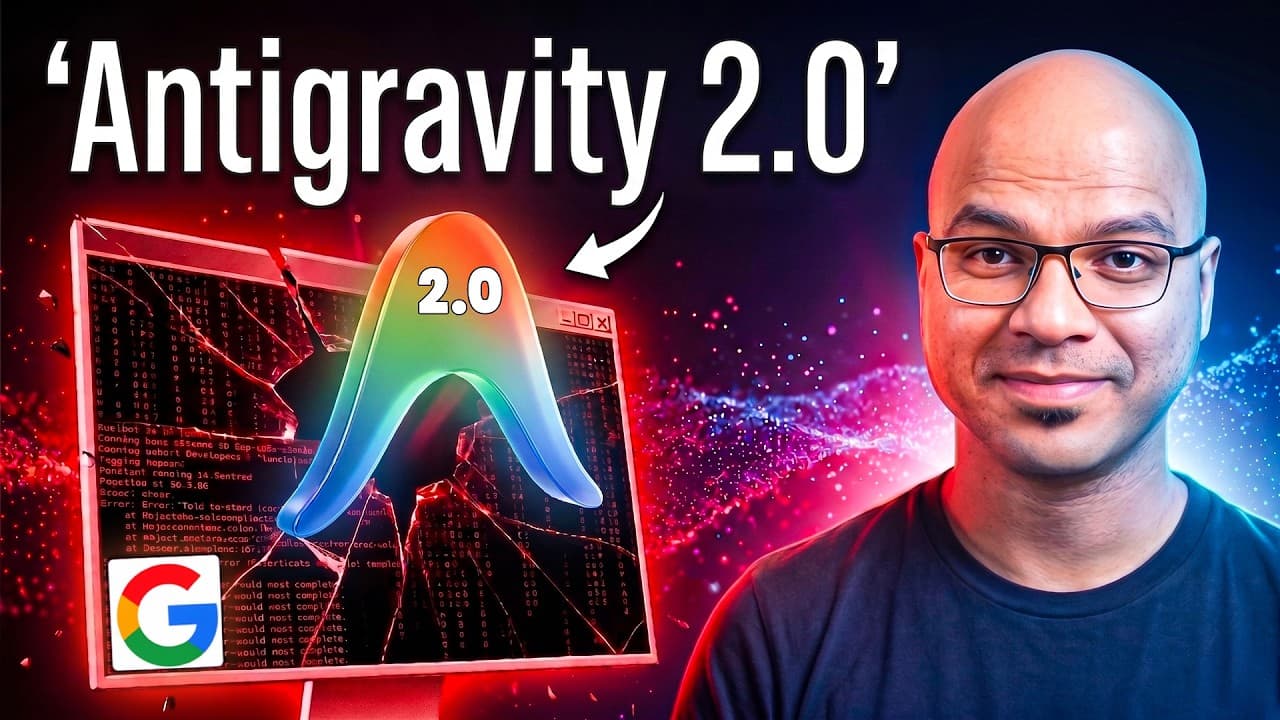
Google’s AntiGravity 2.0 just dropped, and it seems like the tech world is buzzing. Jack Roberts dives into this highly-anticipated update, and the insights are fascinating. In this video, Roberts explains the dual applications of AntiGravity 2.0 and the introduction of the Gemini 3.5 Flash. But what does this really mean for users like you and me?
I've often wondered how tech giants like Google envision our future. With AntiGravity 2.0, we see a push towards a more controlled ecosystem. The separation into a Google-only model environment and an IDE that limits external models feels restrictive. But is it really a bad thing? It depends on whether you value integration over flexibility.
The Rise of Multi-Parallelized Agents
One of the coolest features of AntiGravity 2.0 is the use of multi-parallelized agents. These agents work in sync to perform complex tasks concurrently. Imagine delegating research to several sub-agents at once. It's like having a team of AIs working for you!
Jack demonstrates this with practical examples, showcasing streamlined productivity. However, some might find the exclusive reliance on Google models limiting. Is it really worth it? I suppose it’s a trade-off between raw power and versatility.
Gemini 3.5 Flash: A Game Changer?
The introduction of Gemini 3.5 Flash in this new framework is a big deal. It’s four times faster and 40% cheaper than previous Pro models. That’s impressive! But here's the thing: speed and cost alone don't make a model superior.
Jack’s critique about the exclusivity of Google models is spot-on. He suggests a multi-brain strategy, using classic IDEs to incorporate AI models like Claude and ChatGPT. This idea resonates with me. I mean, why not combine the best of all worlds?
Transitioning from Gemini CLI
The move from Gemini CLI to AntiGravity CLI marks a notable shift. Jack highlights how this transition enhances functionality across platforms, though it remains within Google's ecosystem. While this might be useful for some, others might find the lack of openness a real bummer.
Personal Takeaways
Honestly, I was intrigued by the potential of these advancements. The integrated solutions and the promise of future possibilities are exciting. But the limitations Jack points out can't be ignored. Shouldn't users have the freedom to choose the best tools for the job?
For anyone interested in learning more about these innovations, ChatYT offers a comprehensive analysis of tech trends. It's a great place to expand your understanding of these complex topics.
Related Content
Frequently Asked Questions
What is AntiGravity 2.0?
What is Gemini 3.5 Flash?
How does AntiGravity 2.0 differ from previous versions?
What limitations does AntiGravity 2.0 have?
Why is the transition from Gemini CLI significant?
Chat with this Video
Ask AI anything about this video. Get instant answers, summaries, and insights.
Related Videos
 17:22
17:22End of Gemini CLI - Welcome to Antigravity 2.0 - Evolution Unveiled
 17:18
17:18Claude não gera mais código como antes - A Surprising Insight
 13:44
13:44Hermes just got 10x better... - Discover Revolutionary AI Updates
 16:24
16:24What Karpathy Joining Anthropic Actually Means For Claude - A New Direction
 16:11
16:11I Cancelled TradingView Plus After This 1 Claude Code Prompt | Multi Chart & Advanced Indicators - I Cancelled TradingView Plus After This 1 Claude Code Prompt - A Game-Changer?
 9:15
9:15